On this page15 sections
Choosing an EMDR app is a workflow decision more than a feature decision. You need bilateral stimulation you can control in real time, in the room and over telehealth, on whatever device your client already owns.
Past that, they diverge. Some are built around their own tactile hardware, some around their own video call, and some sit alongside the tools you already use. This guide compares the leading EMDR apps available in 2026 on the criteria that decide the fit.
One note first. Everything here is a bilateral stimulation tool. It delivers one component of EMDR. The protocol around it is yours, and needs a licensed therapist.
Does remote, app-based BLS work in a clinical setting?
The real question for a digital practice is whether EMDR still works when the bilateral stimulation comes from an app instead of equipment in the room. The short answer is yes.
A 2023 review of 16 studies and 1,231 people found online EMDR to be a practical option with promising results, and one of those studies found no real difference in PTSD outcomes between online and in-person sessions.
The device matters less than you might expect. Research on why BLS works suggests the effect comes from the steady left-right input holding the patient's attention, not from the specific device that delivers it. A phone buzz or an Apple Watch tap works much like a handheld pulser.
So the choice comes down to which tool supports your practice best. That is what the rest of this guide compares.
What to look for in an EMDR app
The criteria that matter most for clinical use, roughly in the order they tend to decide the choice:
- Therapist control in real time: Can you change speed, style, and stimulation type mid-session while your client receives BLS on their own device? This is the difference between a session you run and a screen your client watches.
- Telehealth workflow: How does your client join? A link in a browser is the lowest-friction path. An app install is more setup, but usually gives smoother haptics.
- Video handling: Some platforms include their own video call. Others run alongside the tool you already use, like Zoom, Doxy.me, or SimplePractice. Built-in video means one tab to open. Running alongside means you keep the video setup you already use and trust. It decides whether your sessions move platforms. Our guide to EMDR telehealth tools walks through the full setup.
- How tactile BLS is delivered: Does the app use devices your clients already own, or does it require buying separate hardware? For telehealth, that is often the difference between a smooth session and a shipping-and-setup project. (How bilateral stimulation works covers why the device matters less than the rhythm.)
- Platform coverage: Native apps usually give smoother haptics than browser-only tools, especially for tactile BLS.
- HIPAA readiness: Is the platform built for compliance with healthcare privacy rules?
- Cost: Subscription price, what the free tier includes, and any hardware needed for tactile BLS.
App comparison
Running sessions
| App | Therapist control | Platforms | Tactile BLS |
|---|---|---|---|
| EMDR Tappers | Yes, mid-session, synced live | Native iOS, Android, Apple Watch, plus browser | Client's own phone or Apple Watch |
| BilateralBase | Yes, remotely over the internet | Browser only, no native mobile apps | Tactile Tappers, $136 |
| bilateralstimulation.io | Yes, client joins by link | Browser only | Remote buzzers, $129, USB to computer |
| remotEMDR | Yes, color, speed, direction, sound | Browser only, no native apps | Third-party Bi-Tapp Bluetooth tappers |
| Wevana | Yes, via web portal session code | Web portal plus native iOS and Android apps | Wevana Tabs, $249, wireless |
Practice fit and cost
| App | Video | HIPAA / BAA | Price and free tier |
|---|---|---|---|
| EMDR Tappers | Runs alongside the video platform you already use, so your setup does not change | HIPAA-compliant. BAA included, free, with every therapist account | Free tier with visual, audio, haptic BLS |
| BilateralBase | Built in, vendor states encrypted | HIPAA and GDPR stated. BAA free with account | Free 5 hours monthly. Pro $12.95 monthly |
| bilateralstimulation.io | None. Runs alongside yours | States HIPAA compliance. BAA on $15 Professional plan | Unlimited free plan. Professional $15 monthly |
| remotEMDR | Built in, vendor states HIPAA-compliant | States HIPAA compliance. BAA available | $25 monthly or $250 yearly, 14-day trial |
| Wevana | None. Runs alongside yours | Terms state not tailored for HIPAA | Portal and app free. Tabs $249 |
Features, pricing, and compliance details verified against vendor websites and terms, August 2026. Check each vendor's site for the most current information, since features and pricing change.
At a glance
- EMDR Tappers: our pick, best overall for therapist-led BLS in office and over telehealth
- BilateralBase: best for browser-based telehealth practices that want built-in video with their BLS
- bilateralstimulation.io: best for laptop-based practices that want a straightforward free browser tool
- remotEMDR: best for browser sessions with fine control over visual and audio BLS
- Wevana: best for practices that want dedicated wireless tactile hardware
Detailed reviews
EMDR Tappers
Best for: best overall, for therapist-led sessions across devices, in office or over telehealth.
EMDR Tappers is a bilateral stimulation platform with native iOS and Android apps, a web app, and a native Apple Watch app. In a therapist-led session you set speed, style, and stimulation type from your own screen, and every change syncs to your client's device in real time, without stopping. More about our EMDR software for therapists.
Your client joins from a link you send by text or email. On a computer they open it in a browser with no download. On a phone it points them to the free app, which delivers vibration and Apple Watch haptics.
The session runs separately from your video call, so your telehealth setup does not change, and tactile BLS comes from devices clients already own. The platform is HIPAA-compliant: sessions are encrypted and no personal health information is required. The free tier covers visual, audio, and phone or Watch haptic BLS, with no trial period and no ads. Clients join for free.
BilateralBase
Best for: browser-first telehealth practices that want video and BLS in one platform.
BilateralBase is a UK-based telehealth EMDR platform. It runs in the browser, with no native mobile apps, and you adjust BLS remotely mid-session. Video conferencing is built in, which the vendor states is encrypted. The site states HIPAA and GDPR compliance, with the agreement downloadable from a free account. Tactile BLS uses its own Tactile Tappers at $136, which the site says do not work with an iPhone or iPad.
bilateralstimulation.io
Best for: laptop-based practices that want a straightforward browser tool with a genuinely free tier.
bilateralstimulation.io runs in the browser and is built for therapist-led sessions. You run the session and your client joins by link with no account. It has no video and runs alongside Zoom, Doxy, SimplePractice, and similar. Tactile BLS uses the platform's own remote buzzers at $129, which plug into a computer, not phones or tablets. The free plan is unlimited and covers basic BLS.
remotEMDR
Best for: telehealth practices that want synchronized BLS and video in the same browser tab.
remotEMDR runs in the browser, with no native apps, and is built around synchronized BLS between your device and your client's. You control color, speed, direction, and sound in real time. It includes a video chat the vendor states is HIPAA-compliant, and works with Zoom, Doxy.me, and SimplePractice. Tactile BLS comes through an integration with third-party Bi-Tapp Bluetooth tappers. Pricing is $25 a month or $250 a year after a 14-day trial.
Wevana
Best for: practices where a dedicated tactile device is the priority, after checking those terms.
Wevana takes the hardware route. Its Wevana Tabs are wireless tactile devices at $249 that pair with a companion app, and a web portal controls speed and intensity remotely using a session code. The portal and app are free, so the cost is the hardware. It has no video of its own and runs alongside Zoom, SimplePractice, Doxy, and similar. On compliance, Wevana's terms state that the Services are not tailored to comply with regulations such as HIPAA, and may not be used if your interactions would be subject to those laws.
Self-guided apps for clients
Apps built for individuals rather than therapist-led sessions are a different category, covered in our companion guide to self-guided apps for clients.
Which EMDR app should you choose?
If you run telehealth on a video platform you already use: EMDR Tappers. The session runs separately from your video call, so your setup does not change. Your client joins by link and gets tactile BLS on their own phone or Apple Watch.
If you work in-office and want dedicated tactile hardware: BilateralBase or bilateralstimulation.io. Some therapists prefer the weight and feel of a physical tapper, a fair reason to pick one. Check what the hardware connects to first: BilateralBase's Tactile Tappers do not work with an iPhone or iPad, and bilateralstimulation.io's buzzers need a computer. Wevana also sells wireless tactile hardware, though its terms state the service is not tailored for HIPAA, so check that first.
There is a cheaper middle path worth knowing about. EMDR Tappers runs on iPhones with iOS 15.6 or later and Android phones on Android 7.0 or later, so even a pair of older phones from around 2015 or 2016 can sit in your office as dedicated tappers. Your client holds one in each hand and you control both from your screen.
If your practice relies on Apple Watch: EMDR Tappers is the only platform in this comparison with a native Apple Watch app. Clients feel the haptics on their wrist, synced in real time to the session you run.
For clients doing self-guided work between sessions: EMDR Tappers uses the same app you use in session, so there is nothing new for the client to learn.
For budget-conscious practices: bilateralstimulation.io has an unlimited free plan, and BilateralBase's includes five hours a month. EMDR Tappers covers visual, audio, and phone or Watch haptic BLS in its free tier. With the hardware platforms, tactile BLS means buying their hardware, which costs between $129 and $249. See what EMDR buzzers, pulsers and tappers cost for the full price guide.
Frequently asked questions
Can I use multiple EMDR apps in my practice?
Yes. One app for in-office sessions and another for telehealth is a reasonable split. The cost is asking clients to learn a second setup, so most practices keep one as default.
Do any of these apps replace physical BLS equipment?
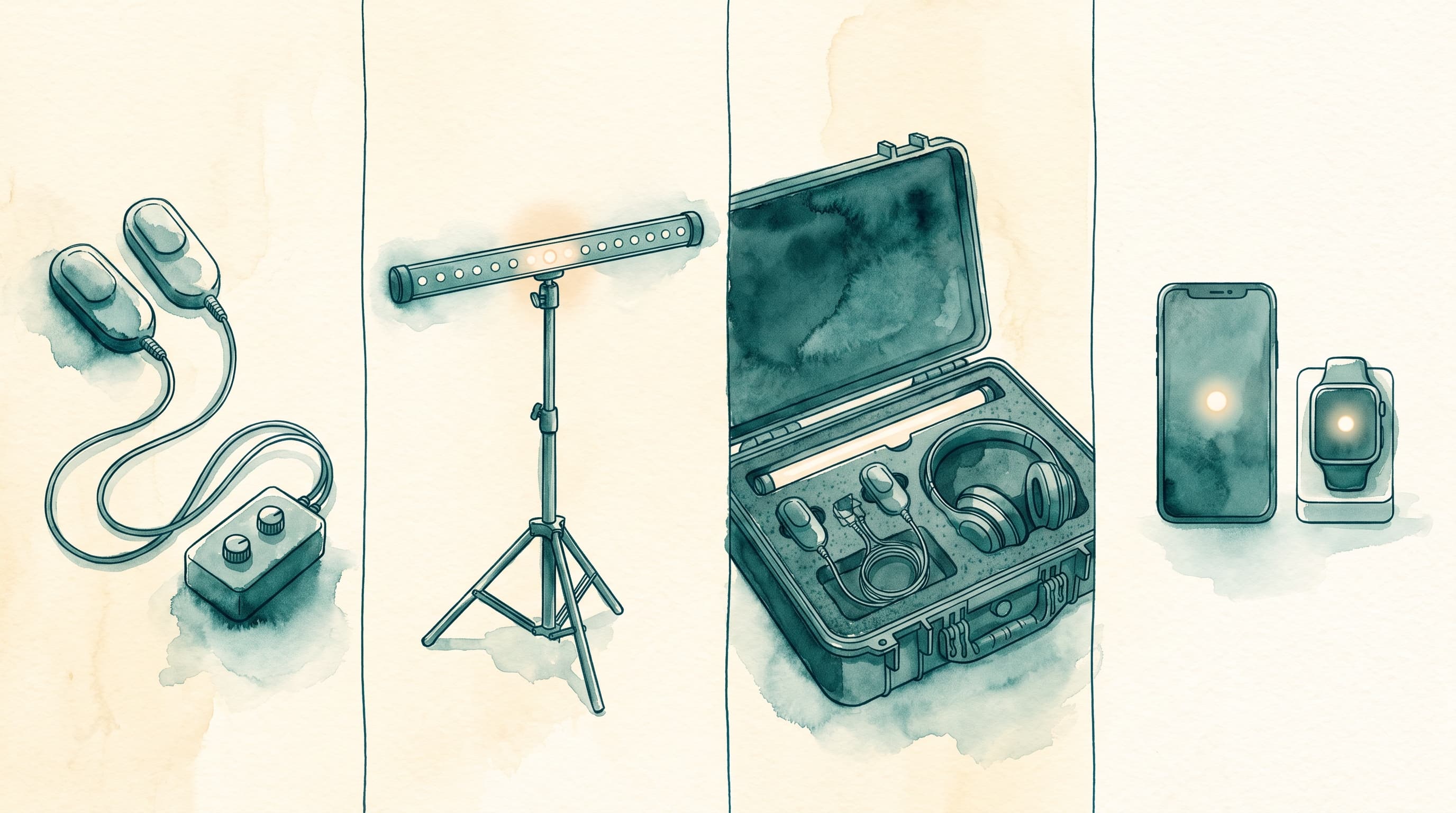
Digital apps can replace physical pulsers, light bars, and tappers for many use cases, especially telehealth. Physical equipment still fits some in-office workflows. See our comparison of EMDR Tappers vs. physical BLS equipment.
Are these apps HIPAA compliant?
HIPAA compliance depends on the platform's infrastructure and on how you use it. EMDR Tappers is HIPAA-compliant: sessions are encrypted, no personal health information is required, and a BAA is included, free, with every therapist account. The others vary: BilateralBase provides its agreement with a free account, bilateralstimulation.io places it on the $15 Professional plan, remotEMDR states one is available, and Wevana's terms state its service is not tailored for HIPAA. Check each vendor's terms before using any tool with client data. Our details are in the FAQ.
Can I use these apps with Zoom or my existing telehealth platform?
In most cases, yes. bilateralstimulation.io and Wevana have no video of their own and run alongside Zoom, Doxy.me, SimplePractice, and similar. EMDR Tappers works the same way: you stay on your call and share a separate session link. BilateralBase and remotEMDR include their own video, and both state they also work alongside other platforms. For a step-by-step setup, see what you need for remote EMDR sessions.
Do clients pay separately for these apps?
It depends. With EMDR Tappers, clients join for free, with no account required and no hardware to buy. Most browser-based platforms also let clients join by link without paying separately. Tactile BLS on hardware-based platforms means buying the vendor's device, so agree who covers that.
This article is for educational purposes. Feature claims, pricing, and compliance details were verified against vendor websites and terms in August 2026 and may change. For clinical decisions, consult your practice's requirements and each vendor's current documentation. This is not medical advice.