On this page10 sections
If your therapist has recommended EMDR therapy, you may be wondering what bilateral stimulation is and what it will feel like. This guide explains bilateral stimulation in plain language, without clinical jargon.
What is bilateral stimulation?
Bilateral stimulation, often shortened to BLS, is any form of alternating sensory input: left side, right side, left side, right side. It's one of the core components of EMDR (Eye Movement Desensitization and Reprocessing) therapy, a well-researched treatment for trauma.
There are three main types of bilateral stimulation.
Visual
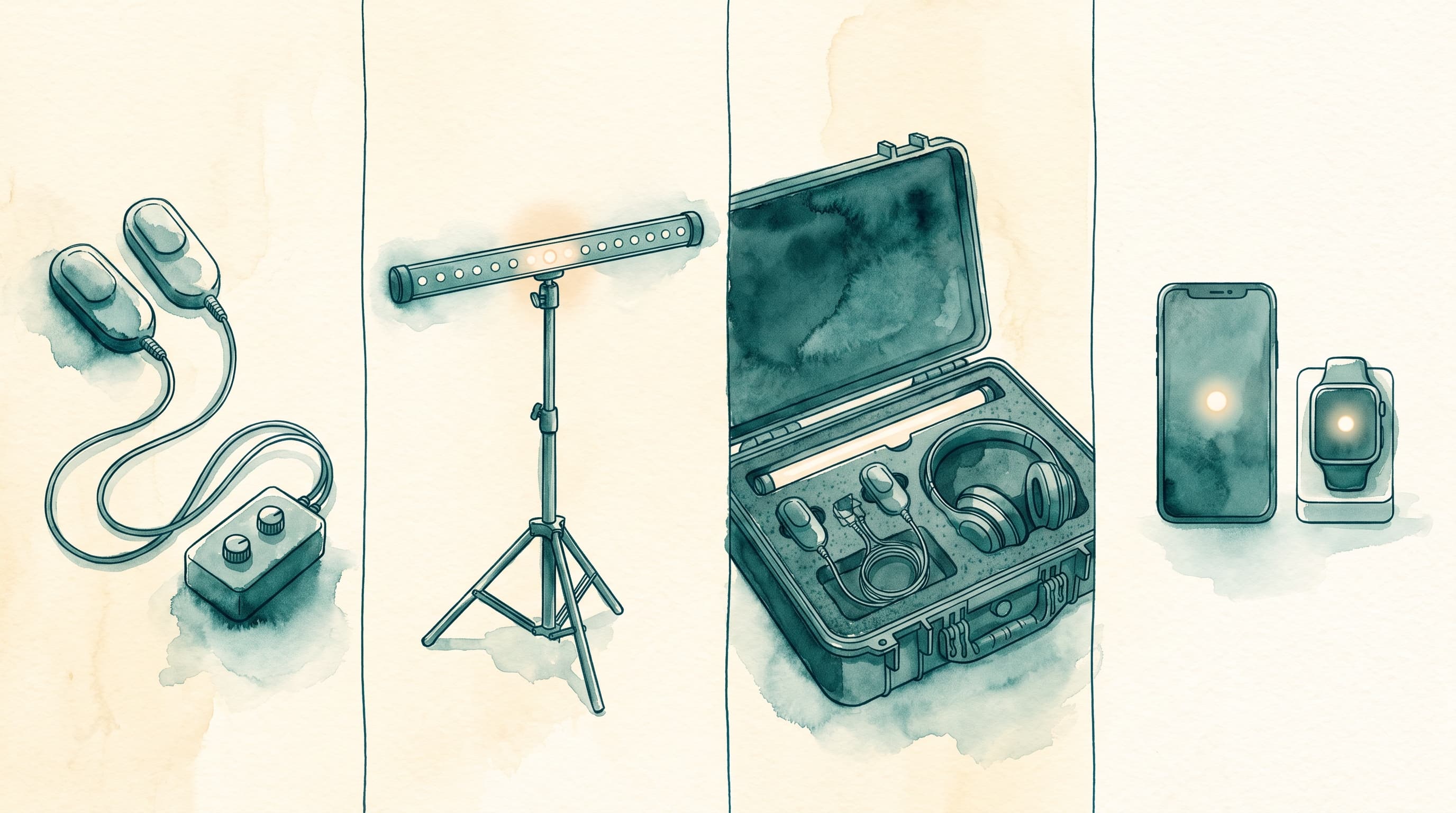
Your eyes follow a moving object back and forth. This can be a dot on a screen, your therapist's finger, or a light bar. Visual BLS is the original form used in EMDR therapy, and it's where the "eye movement" in EMDR's name comes from.
Audio
You hear alternating sounds, typically a tone in your left ear, then your right ear, then left again. This is usually done with headphones, and the tones are gentle and rhythmic.
Tactile (haptic)
You feel alternating physical sensations, such as a tap on your left hand then your right, or vibrations that alternate between sides. Traditionally, therapists deliver tactile BLS using small handheld devices called pulsers or tappers. Some modern digital platforms can also deliver tactile stimulation through a phone or a smartwatch, though this varies by tool. EMDR Tappers is one of the platforms that supports this, so clients can receive tactile BLS on devices they already own. For how phone and Watch haptics compare with dedicated pulsers, see physical BLS equipment vs. EMDR Tappers.
Why is bilateral stimulation used in EMDR therapy?
BLS is not a standalone treatment. It's a structured tool used at specific points during an EMDR session, primarily during the phases where the client holds a difficult memory in mind and the therapist helps them reprocess it.
One leading explanation for why BLS helps is called dual attention. When your senses alternate (left, right, left, right), your attention splits between the memory you're holding in mind and the rhythm of the stimulation. This seems to change how the memory gets processed. Over the course of a session, and often across several sessions, the memory tends to become less distressing and less physiologically activating.
Researchers have proposed other mechanisms as well, including working memory (the idea that the BLS competes for mental resources, which makes the memory feel less vivid) and the calming effect of rhythmic sensory input. The exact neuroscience is still being studied. What's more settled is the clinical outcome: within the complete EMDR protocol, BLS is a component of a therapy that major clinical bodies recommend for PTSD. The World Health Organization and the U.S. Department of Veterans Affairs recommend it, and the American Psychological Association conditionally recommends it. Reviews that combine many trials find EMDR clearly reduces PTSD symptoms compared with control groups, including a 2020 review of 76 trials that measured a large effect.
One thing worth saying clearly: BLS is an important component of EMDR therapy, a structured 8-phase protocol that a licensed, trained therapist guides you through.
What does BLS feel like?
Most people describe bilateral stimulation as surprisingly calming. The rhythm settles into the background after the first minute or so, and you can let your attention drift to whatever you want to notice. You aren't doing anything actively with the stimulation; it happens alongside your thoughts and feelings rather than in place of them.
In a therapist-led session, a single set of BLS usually lasts between 20 and 60 seconds, and your therapist pauses between sets to check in. You can speak during a set if something important comes up, and you can ask to pause, slow down, or switch modalities at any point. It's a collaborative process, not something that's done to you. If difficult emotions surface, that's often a sign the processing is working, and your therapist is trained to help you stay with the material when it's useful or step back if it isn't.
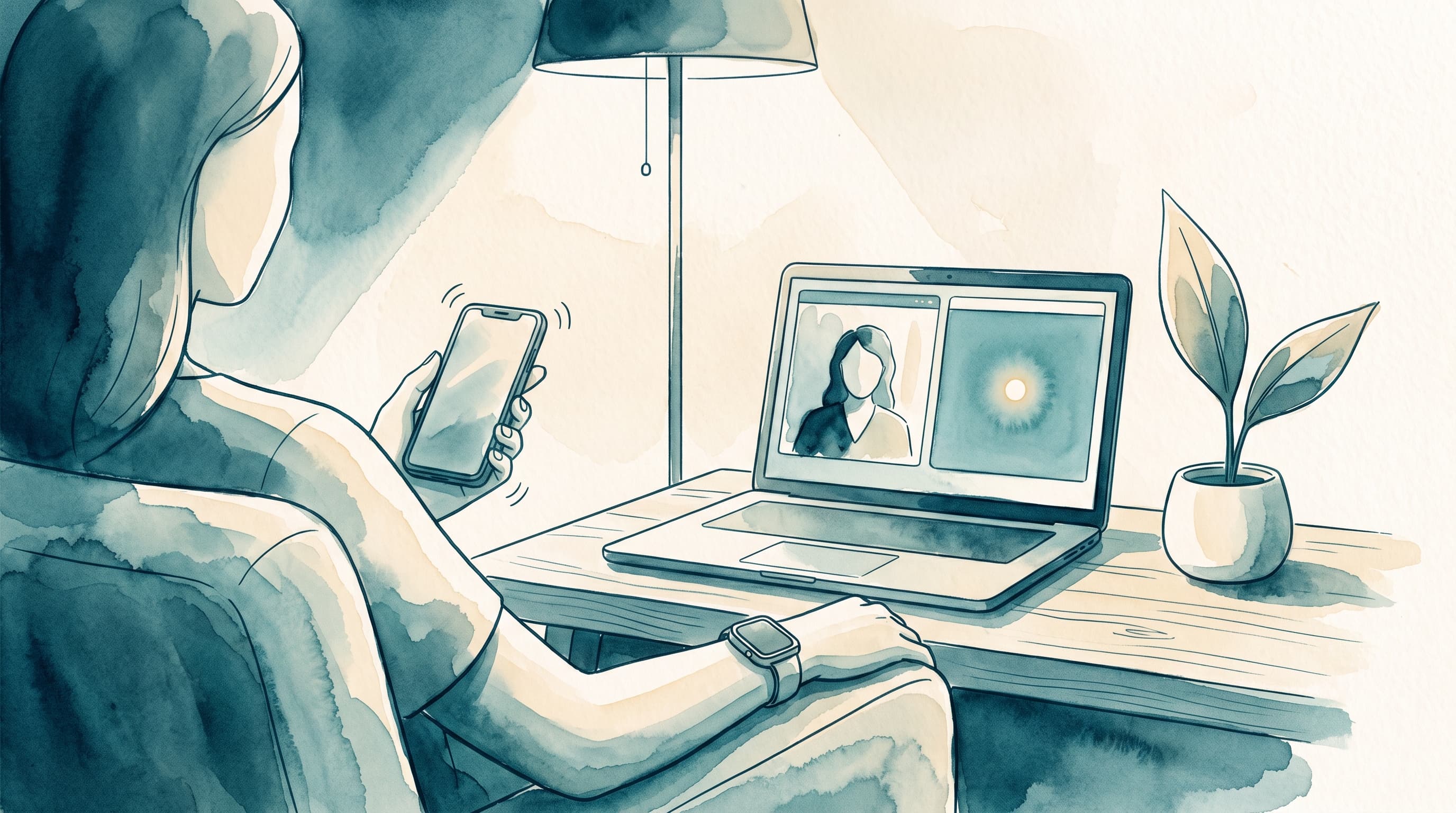
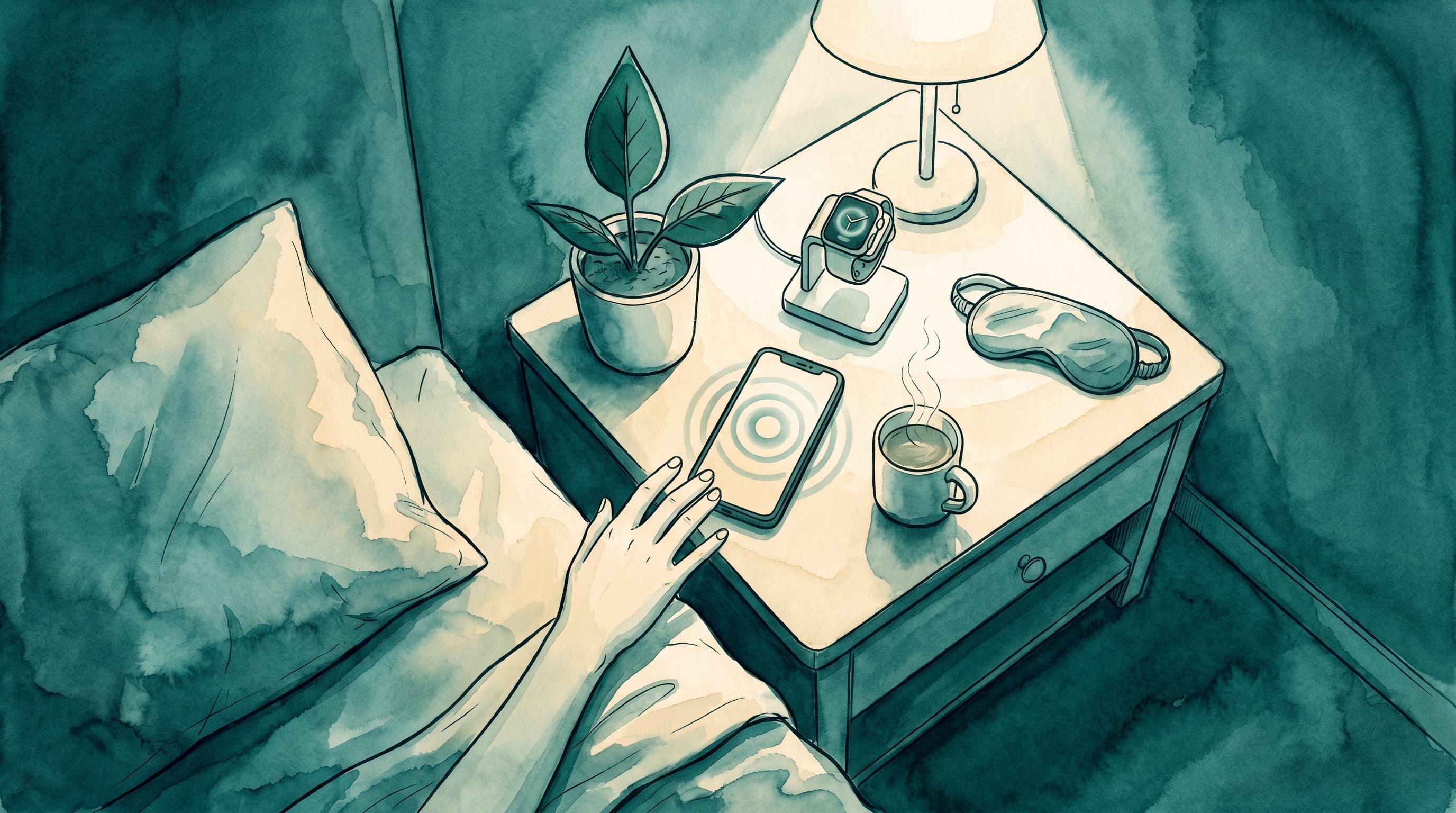
If you're using BLS on your own, the feel is often closer to a short meditation. The app's modalities can support a few kinds of practice. Slow tactile BLS on your phone can be used for winding down. Gentle audio through headphones can pair with a breathing practice. Haptic taps on an Apple Watch can accompany calling to mind a safe place or a positive memory, a technique borrowed from EMDR's preparation phase. You set your own pace, you pause when you want, and the goal is usually to center yourself rather than to process anything specific. EMDR Tappers is built for both contexts: a therapist running a session with you, or you using the app on your own between sessions or outside of therapy entirely.
Which type of BLS is best?
There's no single best type. What seems to matter is the back-and-forth rhythm itself, not which sense it uses: studies that compare eye movements with listening tasks find similar results. Visual, audio, and tactile BLS can all work well. If you're in EMDR therapy, your therapist will recommend what fits your situation; if you're using BLS on your own for calming or grounding, try each and see which settles you best.
- Visual is the most traditional and the most widely studied in clinical trials.
- Audio is a good option when eye movement feels uncomfortable or distracting.
- Tactile works well when you prefer a more physical, grounded sensation, or when it's easier to keep your eyes closed.
Traditionally, combining modalities in a single session has been a little clunky. A therapist might use a light bar for visual BLS and then hand the client a pair of physical pulsers for tactile, juggling two separate pieces of equipment with two pacing controls. Modern digital platforms have made this smoother. EMDR Tappers, for example, can deliver visual, audio, and tactile BLS from a single session, with the therapist (or the solo user) adjusting intensity and pace across all three in real time.
Can I use bilateral stimulation on my own?
For some purposes, yes. This is where the distinction between bilateral stimulation and EMDR therapy really matters.
BLS on its own can be used as a calming or grounding technique, in the same general category as breathwork, progressive muscle relaxation, or guided visualization. Francine Shapiro, who developed EMDR, wrote about adapting techniques from the preparation phase of EMDR for self-regulation in her book Getting Past Your Past. There's an open-access review of the book if you want a summary first.
EMDR therapy is different. Processing traumatic memories with the full 8-phase protocol should always be done with a licensed, EMDR-trained therapist. Self-directed work on trauma, without clinical guidance, can bring up material that's difficult to manage alone.
If you'd like to use BLS for calming or between-session practice, talk to your therapist about what makes sense for your situation. If you want to try a tool that provides BLS, EMDR Tappers offers visual, audio, and tactile bilateral stimulation on phone, tablet, browser, and Apple Watch, with a free tier that includes all three modalities. You can start visual or audio BLS without creating an account. Tactile BLS needs one. If you're comparing apps for solo use, our guide to bilateral stimulation apps for calming, sleep, and stress lays out the options.
What devices work for bilateral stimulation?
Different BLS tools use different hardware. Traditional pulsers and light bars are standalone devices. Modern apps can deliver BLS on phones, tablets, web browsers, or wearables.
One practical difference matters for a lot of sessions: splitting BLS across multiple devices simultaneously (for example, visual on the phone plus tactile on an Apple Watch) requires the app to keep those devices synchronized in real time. Most BLS tools, including the well-known browser-based platforms, run all BLS on a single screen rather than coordinating across the client's devices.
EMDR Tappers is built around this kind of multi-device, real-time synchronization. In a therapist-led session, the therapist controls the session from their screen and the client receives BLS on whichever combination of devices they have (phone, tablet, Apple Watch, browser), with everything staying in sync even when the therapist and client are in different locations. For solo use, the same multi-device sync means you can run visual BLS on your phone while feeling tactile haptics on your Apple Watch, without jumping between apps or losing coordination between them.
Therapists comparing platforms on this point can see our best EMDR apps for therapists guide.
Thinking about buying tappers or buzzers? Our guide to whether you still need EMDR buzzers, pulsers and tappers covers what they cost and who still needs them.
Frequently asked questions
Is bilateral stimulation safe?
BLS as part of EMDR therapy is considered safe and is backed by extensive research. If you experience distress during a session, tell your therapist. They can adjust the stimulation or pause.
How fast should bilateral stimulation be?
Speed varies by person and by context. In a therapy session, your therapist will typically start at a moderate pace and adjust based on your comfort. For self-regulation or grounding on your own, a slower pace is usually more calming than a fast one. There's no single correct speed.
Can bilateral stimulation make things worse?
Processing difficult memories can temporarily bring up strong emotions. This is expected in EMDR therapy, and your therapist is trained to guide you through it safely. For BLS used on its own for calming or grounding, the risk is generally low. Always follow your therapist's guidance when you're working through clinical material.
Can I combine visual, audio, and tactile BLS in one session?
Yes. Different modalities engage the sensory system in different ways, and some people respond better to one combination than another. Whether you can combine them smoothly depends on the tool: traditional equipment usually supports one modality at a time, while modern digital platforms like EMDR Tappers are built to deliver all three together in a single session.
Is bilateral stimulation the same as "brain flossing"?
Not quite. Brain flossing is a social-media name for one form of it: music or sounds mixed to move from ear to ear through headphones. Bilateral stimulation is the wider practice, and it also includes a dot crossing a screen and gentle taps that switch sides. The cautions in this guide apply to brain flossing too.
How long are BLS sets during a session?
A single set of bilateral stimulation typically lasts between 20 and 60 seconds, depending on what you're processing and how your therapist reads the situation. A session will include many sets, with short check-ins between them.
How many sessions does EMDR therapy take?
This varies widely. Some people see meaningful improvement after only a few sessions, especially when working on a single recent event. More complex or long-standing issues may take several months of regular sessions. Your therapist can give you a better estimate based on your specific situation.
This article is for educational purposes. It is not medical advice. If you're working through trauma, anxiety, or a mental health condition, talk to a licensed therapist.